

This post contains affiliate links. If you buy through our links we may earn a small commission — at no extra cost to you. This never influences our recommendations.
Security lighting is one of the most overlooked parts of a home security setup, and the research consistently backs it up: a University of North Carolina study of convicted burglars found that 24% specifically said lighting would deter them from targeting a home — more than any factor besides a dog. Paired with the cameras already covered throughout this site, motion-triggered lighting genuinely amplifies both deterrence and footage quality. This guide covers real sizing by brightness and coverage, and honest picks for hardwired and wire-free setups.
Why Lighting Matters Even If You Already Have Cameras
A camera capturing footage in near-total darkness produces murky, hard-to-use video — even with decent night vision, motion-triggered lighting genuinely improves what a camera actually captures the moment something happens. It’s also a separate, independent layer of deterrence: our do security cameras deter crime guide covers how visible cameras alone deter opportunistic burglars, and bright, motion-activated lighting compounds that effect rather than duplicating it.
Sizing by Brightness and Coverage
| Area | Recommended Lumens |
|---|---|
| Pathways, secondary areas | 200+ lumens |
| Main entry points, driveways | 1,500+ lumens |
| Large backyard or wide coverage area | 3,000+ lumens |
Adjustable brightness is genuinely useful if your fixture supports it — full power specifically for motion events, with a dimmer ambient setting for general evening use, gives you both security and livability without choosing one over the other.
Hardwired vs Solar — The Real Trade-off
Hardwired lights connect to a standard outdoor junction box, delivering continuous power with no battery to manage or recharge — the reliable choice for a primary entry point or driveway where consistent operation matters most. Installation typically requires basic electrical knowledge or a short electrician visit.
Solar lights require zero wiring and install almost anywhere within reach of direct sun, making them genuinely reliable in most climates for walkways and secondary areas. The honest trade-off: they won’t match hardwired brightness at the top end, and performance drops meaningfully in winter months or persistently cloudy climates — plan accordingly if you’re in a region with limited winter sun.
Best Outdoor Motion Sensor Lights — Verified Picks
| Product | Brightness | Power | Detection Range | Best For |
|---|---|---|---|---|
| LUTEC 72W 7500LM | 7,500 lumens | Hardwired | Up to 69 ft | Maximum brightness, large coverage areas |
| Tuffenough Solar 2-Pack | 2,500 lumens | Solar, no wiring | Wide 270° angle | Wire-free installation, walkways and secondary areas |
Best for Maximum Brightness: LUTEC 72W 7500LM Security Light
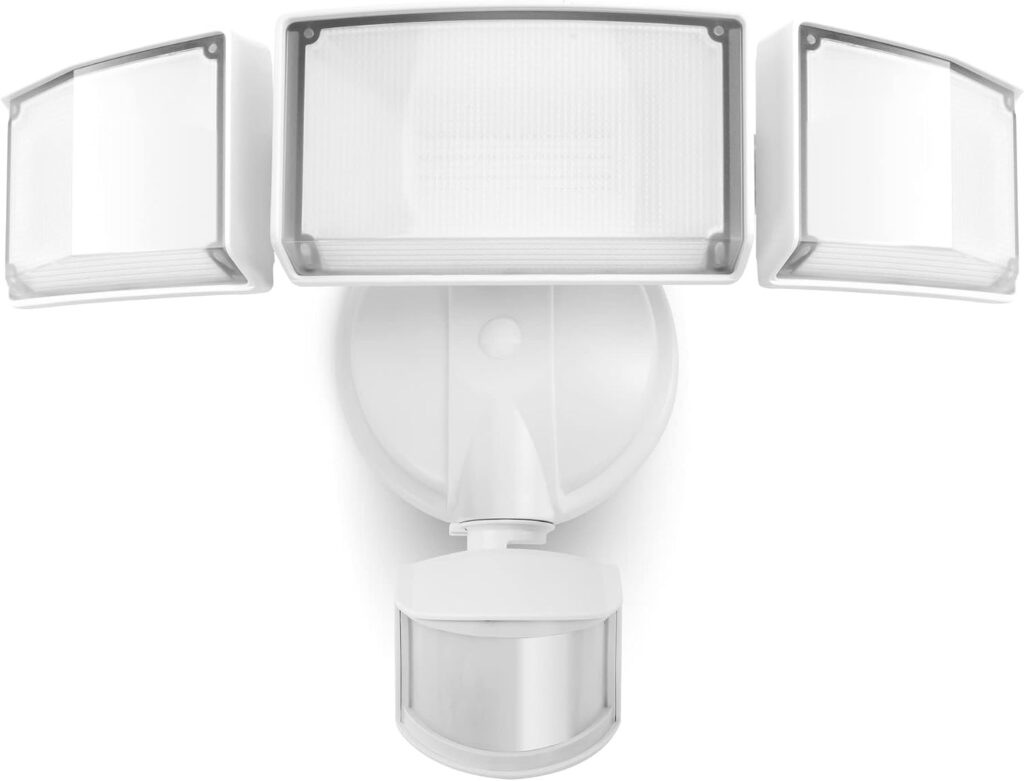
At 7,500 lumens across three adjustable heads, this is genuinely bright enough to fully illuminate a large driveway or backyard — equivalent to a 720W incandescent bulb while using a fraction of the electricity. The 180° sensing angle detects motion up to 69 feet away, and four selectable modes (Test, Security, Dusk to Dawn, and Manual Override) give real flexibility for how and when it activates. IP65 waterproofing and an aluminum housing rated for 50,000 hours mean this is built for genuine long-term outdoor duty, not a light you’ll be replacing after one hard winter.
Best Wire-Free Option: Tuffenough Solar Security Light, 2-Pack
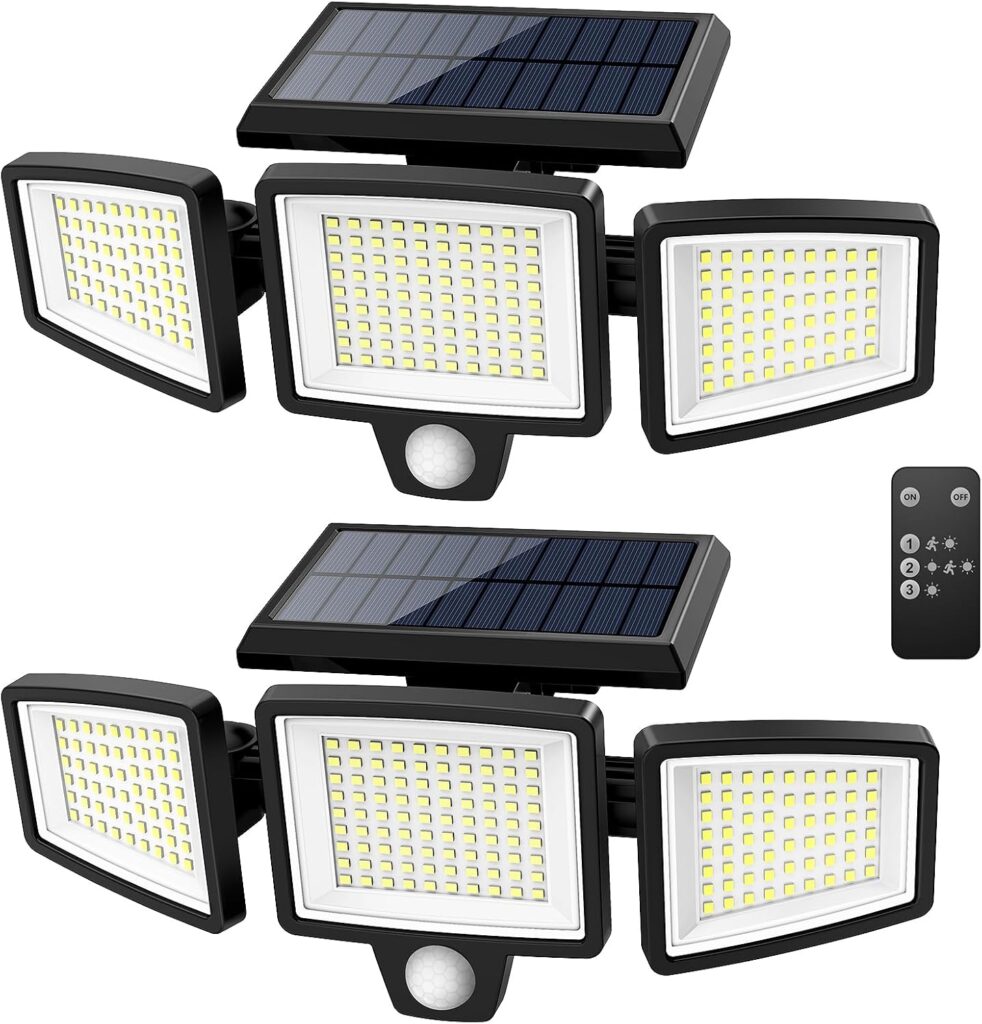
For walkways, side yards, or any spot where running electrical wiring isn’t practical, this solar-powered pick delivers 2,500 lumens across three adjustable heads with a wide 270° coverage angle — genuinely broad enough to eliminate blind spots along a fence line or garden path. A 15-foot cable lets you mount the solar panel in direct sun separately from the light fixture itself, solving the common problem where the ideal light placement and the ideal sun exposure aren’t the same spot. Remote control lets you switch between the three lighting modes without climbing a ladder, and IP65 waterproofing handles real outdoor conditions.
Placement Tips
Cover entry points first. Front doors, driveways, and secondary entrances (side doors, garages) are where opportunistic burglars assess risk most directly — prioritize lighting here before decorative or ambient areas.
Mount at 8-10 feet for optimal motion detection and to make the fixture itself harder to tamper with or disable from ground level.
Avoid overlapping motion zones between multiple lights if you want each fixture to trigger independently — overlapping detection ranges can cause lights to activate together unnecessarily, reducing the useful information a specific trigger location gives you.
Frequently Asked Questions
Do motion sensor lights actually deter burglars?
Yes, and the evidence is specific and credible — a University of North Carolina study surveying convicted burglars found 24% specifically cited lighting as something that would deter them from targeting a home, ranking just behind having a dog as a deterrent factor. This aligns with the broader research on visible security measures covered in our do security cameras deter crime guide.
How many lumens do I need for a driveway or entry point?
1,500+ lumens is the reasonable minimum for main entry points and driveways, stepping up to 3,000+ lumens for large backyards or wide coverage areas. Secondary areas like pathways can use less — 200+ lumens is typically sufficient there.
Are solar motion sensor lights reliable enough for security use?
Modern solar security lights are genuinely reliable in most climates for walkways and secondary areas, though they won’t match hardwired brightness at the top end and perform noticeably worse in winter months or persistently cloudy regions. For your most critical security points — front door, main driveway — hardwired or battery-powered options are the more dependable choice.
Should motion lights be paired with security cameras?
Yes — lighting and cameras address the problem from different, complementary angles. Motion lighting improves what a camera actually captures at night and adds an independent layer of deterrence beyond a visible camera alone. See our best security cameras without subscription guide for camera options to pair with lighting.
What’s the difference between hardwired and solar motion lights?
Hardwired lights connect to an existing electrical junction box for continuous, unlimited power but require basic wiring knowledge or a professional installer. Solar lights need zero wiring and can be installed almost anywhere with direct sun exposure, at the cost of somewhat lower maximum brightness and reduced performance in winter or cloudy climates.
Final Verdict
| Your Situation | Best Pick |
|---|---|
| Maximum brightness, large driveway or backyard | LUTEC 72W 7500LM Security Light |
| No wiring available, walkways and secondary areas | Tuffenough Solar Security Light |
The Bottom Line
Bright, motion-triggered lighting is a genuinely research-backed deterrent, not just a nice-to-have accessory — pairing it with the subscription-free cameras already covered on this site gives you both better footage and independent deterrence value. For maximum brightness and coverage at your primary entry point, the LUTEC 72W delivers real illumination power. For wire-free flexibility along walkways or secondary areas, the Tuffenough solar 2-pack installs anywhere direct sun reaches.
For the full lineup of subscription-free security cameras to pair with your lighting setup, see our best security cameras without subscription guide.