
This post contains affiliate links. If you buy through our links we may earn a small commission — at no extra cost to you. This never influences our recommendations.
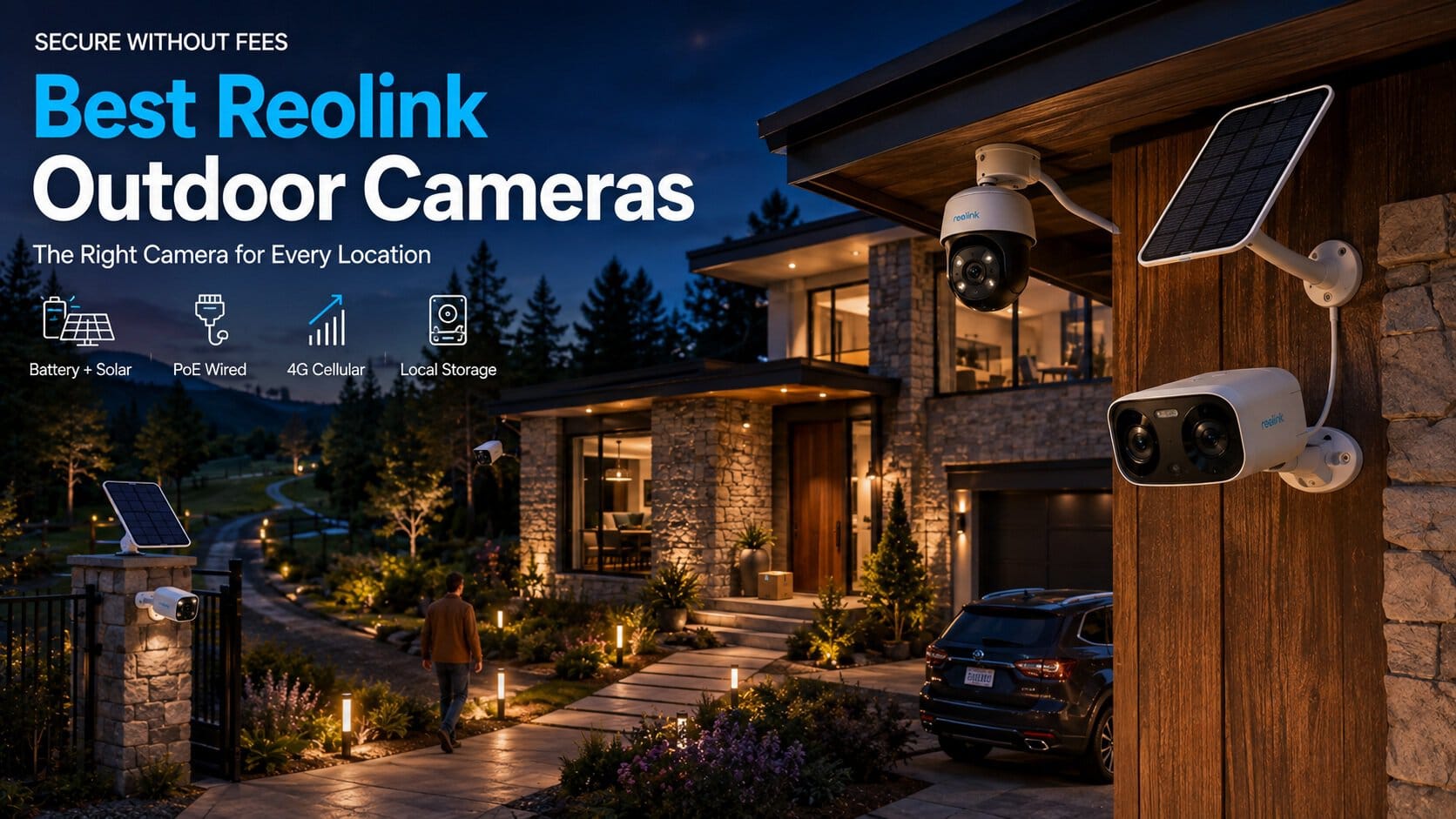
Reolink sells more distinct outdoor camera models than almost any brand covered on this site — Argus, RLC series, TrackMix, Argus Track, Lumus, Go series, and more, split across battery/solar, PoE-wired, and cellular power options. This guide organizes the lineup by the one thing that actually determines your choice — what power and Wi-Fi access you have at the installation location — and picks the right model for each scenario.
The Real Decision: Power Source and Wi-Fi Access
| Your Situation | Right Category |
|---|---|
| No power outlet, but Wi-Fi reaches the location | Argus series (battery/solar hybrid) |
| Power outlet available for a permanent install | RLC series (PoE, wired) |
| No power and no Wi-Fi at all (remote gate, cabin, field) | Go series (4G cellular + solar) |
| Need to track a moving subject across a wide area | TrackMix or Argus Track (dual-lens auto-tracking) |
| Budget deterrent for a driveway or entrance | Lumus (plug-in, spotlight + siren) |
Why Reolink Specifically, vs Other Brands
One useful distinction worth knowing: Reolink owns its firmware end-to-end, while several competing budget brands (Lorex, Swann, Amcrest) rebrand Dahua or Hikvision hardware underneath their own name. This shows up practically in more consistent app design and Reolink’s no-subscription-by-default approach across nearly its entire lineup — the free tier covers all local recording and live view, with an optional cloud tier ($5-10/month per camera) adding 7-30 days of off-site clip backup for those who specifically want it.
Best Reolink Outdoor Cameras — Verified Picks
Best for No Power Outlet: Reolink Argus 4 Pro
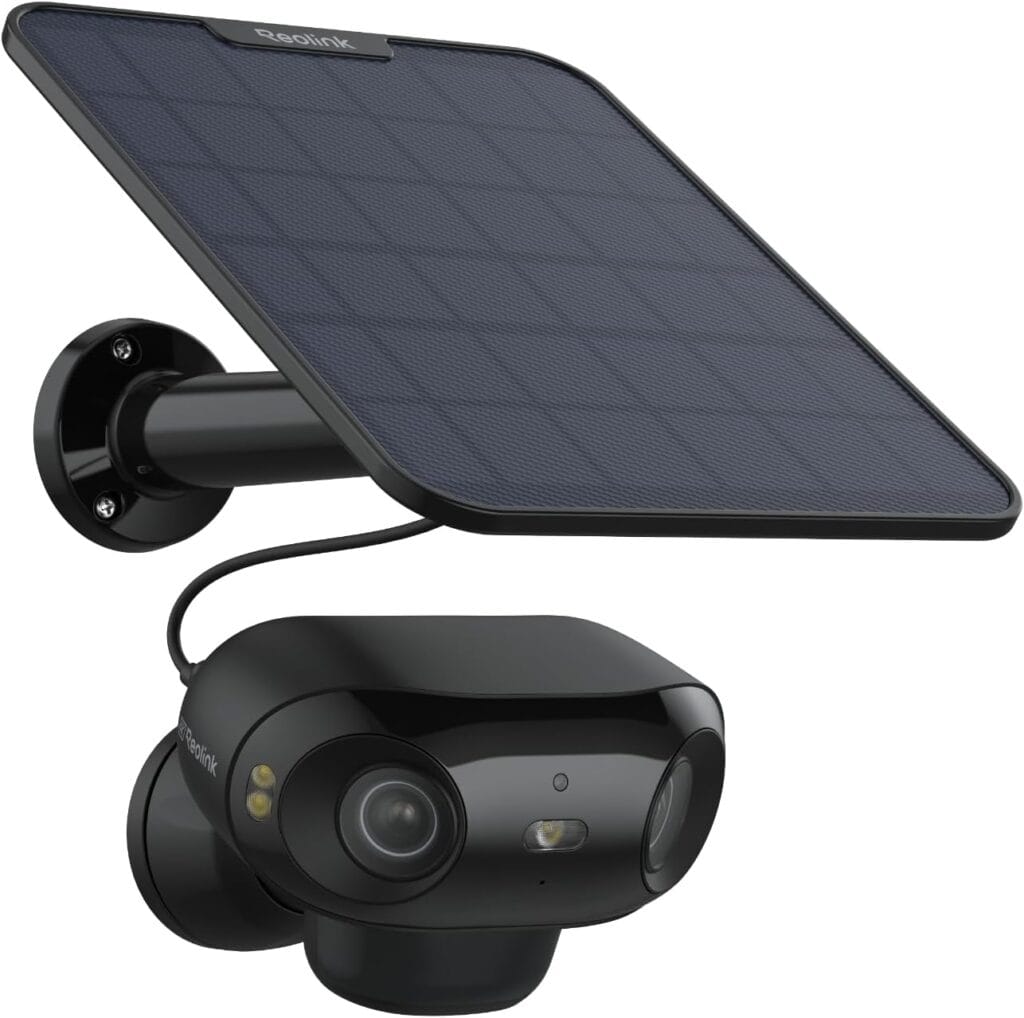
The Argus 4 Pro remains our top overall pick in Reolink’s battery/solar lineup — genuine 4K dual-lens coverage, ColorX night vision usable down to roughly 0.5 lux, and a 6W included solar panel that keeps the removable battery topped up in most climates. This is the right category whenever you have Wi-Fi reaching the install location but no nearby power outlet — a common scenario for a detached garage, a side yard, or a driveway camera positioned away from the house. For the full spec breakdown including honest winter solar performance data, see our Reolink Argus 4 Pro review.
Best for Permanent Wired Installation: Reolink RLC-823A
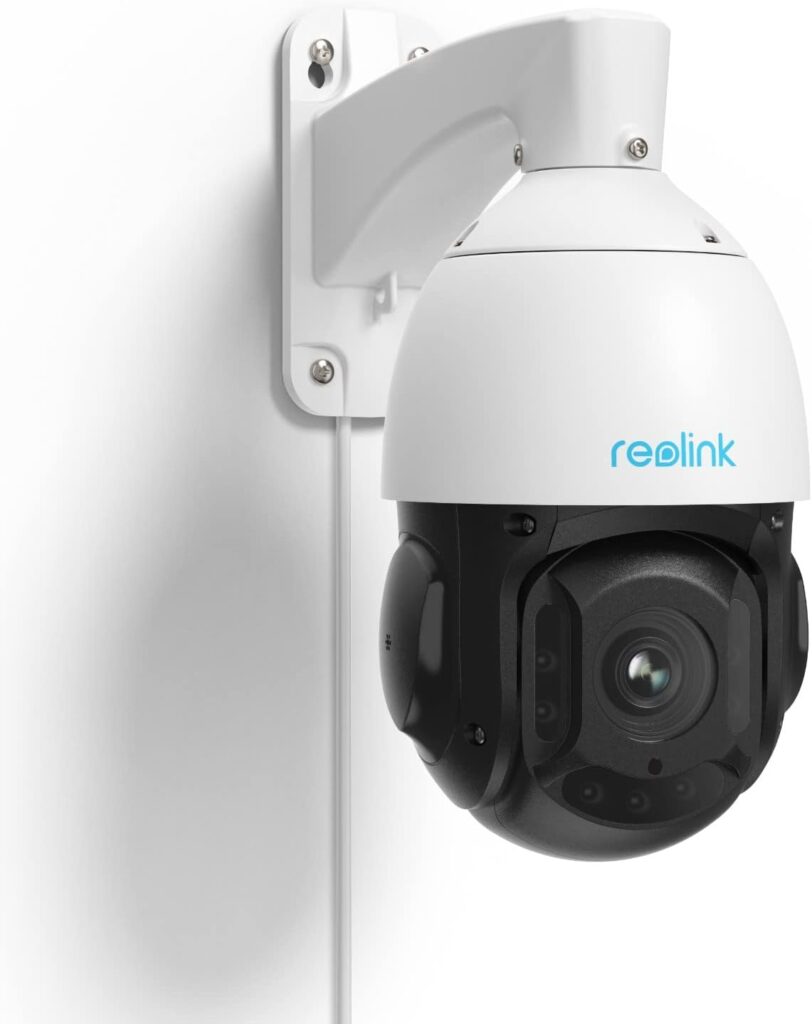
For a location with power already available, PoE wiring delivers the most stable connection and consistent image quality of any Reolink category — one cable handles both power and data, with no battery to manage or recharge ever. The RLC-823A specifically adds real pan-tilt-zoom capability: 360° pan, 90° tilt, and 5X optical zoom (not digital cropping), letting one camera cover a surprisingly wide area that would otherwise need multiple fixed cameras. Built-in spotlights and a siren trigger automatically on person/vehicle detection, adding active deterrence beyond passive recording. It also integrates cleanly with self-hosted software via ONVIF — see our best NVR for Home Assistant guide if that’s part of your setup.
Best for Zero Infrastructure: Reolink Go Plus
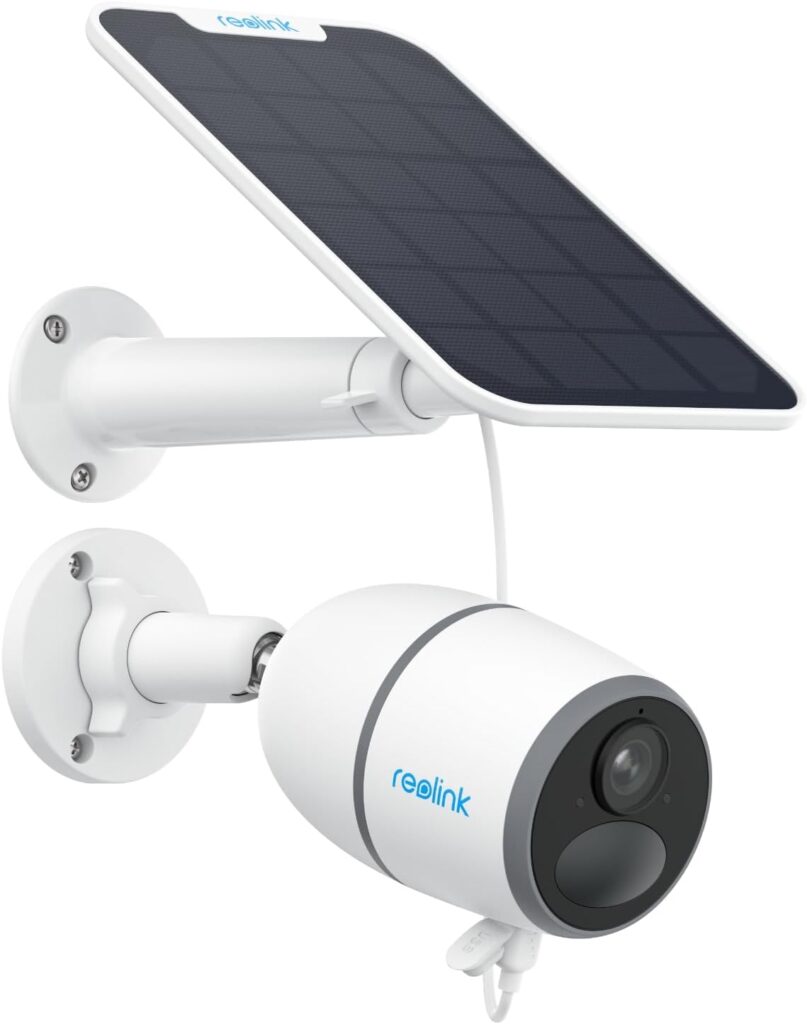
When a location has neither a power outlet nor Wi-Fi coverage — a remote gate, a hunting cabin, a construction site, a distant property line — the Go Plus is the only category that actually works, transmitting over 4G/5G cellular instead of Wi-Fi entirely. The included solar panel keeps the battery charged indefinitely in most conditions, and local microSD recording (up to 128GB) works alongside cellular transmission for genuine redundancy. Requires an active nano SIM data plan, a real ongoing cost, but the only path to true install-anywhere monitoring.
Beyond These Three: Other Reolink Categories Worth Knowing
TrackMix and Argus Track: Both use a dual-lens design combining a wide-angle view with a zoomed tracking lens that follows a moving person or vehicle across the frame — genuinely useful for long driveways or parking lots where a fixed camera loses the subject after a few seconds. TrackMix is the larger, more traditional PTZ-style option available in PoE, WiFi, and 4G variants with a deeper 90° downward tilt, better suited to high mounting on a multi-story building. Argus Track is the newer, more compact residential-friendly version with higher 4K resolution and 6X hybrid zoom, better suited to a typical porch or entryway where a bulkier PTZ camera would look out of place.
Lumus: A plug-in (not battery) budget option with a built-in spotlight and siren that activate on motion — genuinely effective as a low-cost deterrent for entrances, garages, or sheds, and works reliably even on older, weaker Wi-Fi networks. The trade-off is the required power cord, which needs to reach an outdoor outlet or be run through a wall.
Frequently Asked Questions
Which Reolink outdoor camera should I buy if I don’t have an outdoor power outlet?
The Argus series is built specifically for this — a battery and included solar panel keep it running indefinitely without any wiring, as long as Wi-Fi reaches the installation location. The Argus 4 Pro is the current flagship pick in this category.
Do I need Wi-Fi for a Reolink outdoor camera to work?
It depends on the model. Argus and RLC-series cameras both require Wi-Fi or a wired network connection. Only the Go series (4G/5G cellular) works with zero Wi-Fi at all, using cellular data instead — the right choice specifically for locations without any network access.
What’s the difference between Reolink’s Argus and RLC camera series?
Argus cameras run on battery and solar power, connecting via Wi-Fi — the right choice when no power outlet is available. RLC cameras are PoE-wired, requiring a power source and Ethernet connection, but delivering more stable, consistent performance with no battery to manage. Choose based on whether power is actually available at your specific install location.
Does Reolink require a subscription?
No — the free tier covers all local recording, live view, and core AI detection across nearly the entire lineup. An optional cloud storage tier ($5-10/month per camera) adds off-site backup for those who specifically want it, but it’s never required for full local functionality.
Which Reolink camera is best for tracking movement across a large area?
TrackMix or Argus Track, both using a dual-lens design that keeps a moving subject centered in frame as it crosses a wide area — genuinely useful for long driveways or parking lots where a fixed camera loses the subject quickly. TrackMix suits higher, more commercial-style mounting; Argus Track suits a typical residential porch or entryway.
Final Verdict
| Your Situation | Best Pick |
|---|---|
| No power outlet, Wi-Fi available | Reolink Argus 4 Pro |
| Power outlet available, want the most stable connection | Reolink RLC-823A |
| No power and no Wi-Fi at all | Reolink Go Plus |
The Bottom Line
The right Reolink outdoor camera comes down almost entirely to what infrastructure is already at your installation location, not a subjective “best” model. If you have Wi-Fi but no power outlet, the Argus 4 Pro is the strongest all-around pick. If power is available and you want the most stable, hands-off installation, the RLC-823A’s PoE wiring and pan-tilt-zoom coverage are hard to beat. And for genuinely remote locations with neither power nor Wi-Fi, the Go Plus is the only option that actually works.
For the full lineup of subscription-free security cameras across every brand, see our best security cameras without subscription guide. For solar-specific sizing and placement guidance, see our best solar security cameras guide.