
This post contains affiliate links. If you buy through our links we may earn a small commission — at no extra cost to you. This never influences our recommendations.
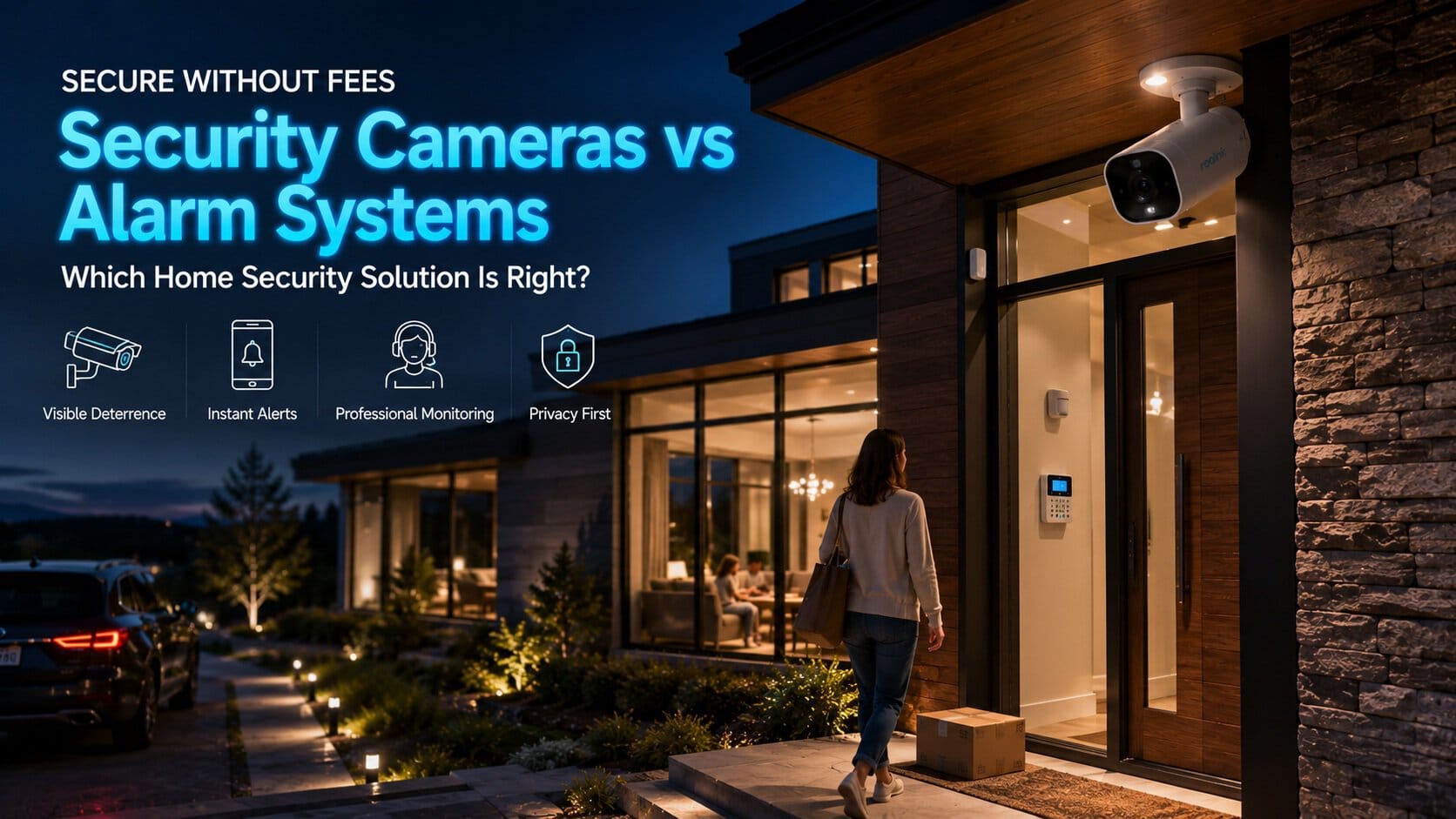
Cameras and alarm systems get lumped together as “home security,” but they solve genuinely different problems. A camera’s job is visibility — seeing and recording what happens. An alarm system’s job is response — detecting an intrusion and doing something about it in real time. Understanding that distinction is the fastest way to figure out what you actually need, rather than buying based on marketing that blurs the line between the two.
What Each System Actually Does
Security cameras — the focus of most content on this site — record footage, send motion alerts to your phone, and provide visible deterrence. What they don’t do on their own: actively respond to an intrusion in progress. A subscription-free camera captures excellent evidence and very likely deters an opportunistic burglar simply by being visible (see our do security cameras deter crime guide for the research behind this), but nobody is watching in real time unless you check your phone at that exact moment.
Alarm systems add door/window sensors, motion detectors, and — critically — the option of professional monitoring, where a live monitoring center receives the alert and can dispatch police, fire, or medical response. This is genuine active intervention during an event, not just a notification and a recording after the fact.
The Real Statistic Worth Knowing
Only 38% of Americans currently use any kind of security system, and nearly a quarter admit they do nothing at all to deter burglars — a genuinely wide gap given how accessible and affordable both cameras and basic alarm equipment have become. This isn’t a reason to panic-buy the most expensive system available; it’s a reason to actually think through what you need rather than defaulting to nothing.
When Cameras Alone Are Genuinely Enough
For most residential situations, a well-placed set of subscription-free cameras covers the core need: deterring opportunistic crime, capturing evidence if something does happen, and letting you check in remotely. This is the right fit if:
- You want visible deterrence and evidence without an ongoing monthly cost
- Your primary concern is package theft, opportunistic burglary, or general peace of mind
- You’re comfortable being your own first responder — checking your phone, calling 911 yourself if something looks wrong
- You live in a lower-crime area where the base rate of serious break-ins is already low
See our best security cameras without subscription guide for building out this kind of setup.
When Professional Monitoring Genuinely Adds Value
Professional monitoring earns its ongoing cost in specific situations where speed of response matters more than after-the-fact evidence:
You’re frequently away or asleep when an alert would come in. A camera notification does nothing if you don’t see it in time — a monitoring center is watching continuously, including the hours you’re not checking your phone.
Medical emergencies are a real concern. Some monitored systems specifically dispatch an ambulance via a panic button or voice command, not just police — genuinely valuable for elderly residents or anyone with a health condition where every minute matters.
You want verified, faster emergency response. Independent testing of one major monitored provider found monitoring agents on the line within 20 seconds of a triggered alarm — a level of speed that simply isn’t possible with a self-monitored camera setup depending on you noticing a notification.
You’re in a higher-crime area or have specific reasons to expect an active break-in attempt rather than just opportunistic theft — situations where real-time intervention meaningfully changes the outcome.
The Hybrid Approach Most Security Experts Actually Recommend
The most consistent guidance across independent security reviews isn’t “choose one” — it’s layer both, with cameras providing broad visibility and evidence while sensors and monitoring provide the intrusion-specific detection and response. A front door camera plus a motion sensor near a common entry point plus a monitored alarm panel covers meaningfully more ground than any single category alone. You don’t need every room wired with a sensor — focus intrusion detection on the entry points that actually matter (front door, back door, ground-floor windows) and let cameras handle broader property visibility.
DIY vs Professional Installation and Monitoring — The Real Cost Trade-off
| Approach | Typical Cost | What You Get |
|---|---|---|
| DIY cameras, self-monitored, no subscription | One-time hardware cost only | Recording, evidence, deterrence, remote viewing |
| DIY alarm kit, self-monitoring | Hardware + optional low-cost app plan | Sensor-based alerts to your phone, no live response |
| Professionally monitored alarm system | Equipment cost + monthly monitoring fee, sometimes install fee | 24/7 live monitoring, dispatch, faster verified response |
Most professional monitoring plans run somewhere in the range of a modest monthly subscription — not enormous, but a genuine recurring cost that compounds over years, similar to the cloud-storage cost math covered in our local storage vs cloud storage guide. Weigh that ongoing cost specifically against how much real-time response speed actually matters for your situation, rather than assuming more monitoring is automatically better.
Frequently Asked Questions
Do I need both cameras and an alarm system, or is one enough?
It depends on what you’re protecting against. Cameras alone handle visibility, deterrence, and evidence well — genuinely sufficient for most residential situations focused on opportunistic crime. An alarm system with professional monitoring adds real-time detection and response, valuable specifically if speed of intervention matters to your situation (frequent absences, medical concerns, higher-crime area). Many security experts recommend layering both rather than choosing exclusively.
Can I get professional monitoring without a full alarm system?
Some providers offer monitoring add-ons for camera-only setups, though the core value of traditional professional monitoring comes from door/window sensors detecting an actual intrusion attempt, not just a camera seeing motion. Check specific provider offerings if you want monitoring without full alarm hardware.
Is a subscription-free camera setup actually safe without monitoring?
For deterring opportunistic crime and providing evidence, yes — research on burglar behavior consistently shows visible cameras deter a meaningful share of would-be intruders regardless of whether anyone’s actively watching. What it doesn’t provide is real-time human response during an active event, which is specifically what professional monitoring adds.
How fast does professional monitoring actually respond?
Independent testing of at least one major provider found monitoring agents connected within 20 seconds of a triggered alarm. Actual response times vary by provider and situation, but this kind of near-immediate live verification is the core value proposition that separates monitored systems from self-monitored cameras.
What’s the most cost-effective way to cover the basics?
A subscription-free camera covering your front door or main entry point, paired with a smart lock for entry control, covers the fundamentals — deterrence, evidence, and access management — at a one-time cost with zero ongoing fees. See our best smart locks guide to round this out.
The Bottom Line
Cameras and alarm systems answer different questions — “what happened” versus “someone respond right now” — and most households don’t need to choose one exclusively. For deterrence, evidence, and general peace of mind without a recurring cost, a well-placed subscription-free camera setup covers the fundamentals genuinely well. Professional monitoring earns its ongoing cost specifically when real-time response speed matters — frequent absences, medical concerns, or a higher-risk situation where minutes genuinely count.
For subscription-free camera coverage, see our best security cameras without subscription guide. For more on what visible cameras actually deter, see our do security cameras deter crime guide.